We Learned How to Be Alone. We Forgot How to Belong.
There is something slightly contradictory about the way we live now.
We’ve never had more language for taking care of ourselves. We regulate our nervous systems, protect our energy, set boundaries, optimise our sleep and track our health. We have supplements and wearables to monitor our recovery and , at the end of the day, a meditation app telling us to breathe.
We have become remarkably fluent in the language of self-care.
And yet, we are increasingly lonely.
In 2025, the World Health Organization published its first major Commission on Social Connection report, describing loneliness and social isolation as widespread problems with serious consequences for health, wellbeing and society. Its research found that roughly 1 in 6 people globally experience loneliness, with young people among the groups most affected. (World Health Organization)
Yet as loneliness becomes recognised as a global health crisis, our approach to wellbeing has become increasingly individualised. The contradiction raises a more interesting question than whether we are simply spending too much time on our phones.
Perhaps the loneliness epidemic is not happening because people have forgotten how to look after themselves. Perhaps it is partly happening because we have become exceptionally good at looking after ourselves as individuals, while becoming less practiced at creating the conditions in which people naturally belong to one another.
Look closely at where wellness, hospitality and retail are heading and a strange pattern begins to emerge: we are increasingly buying, booking and subscribing our way back into community.
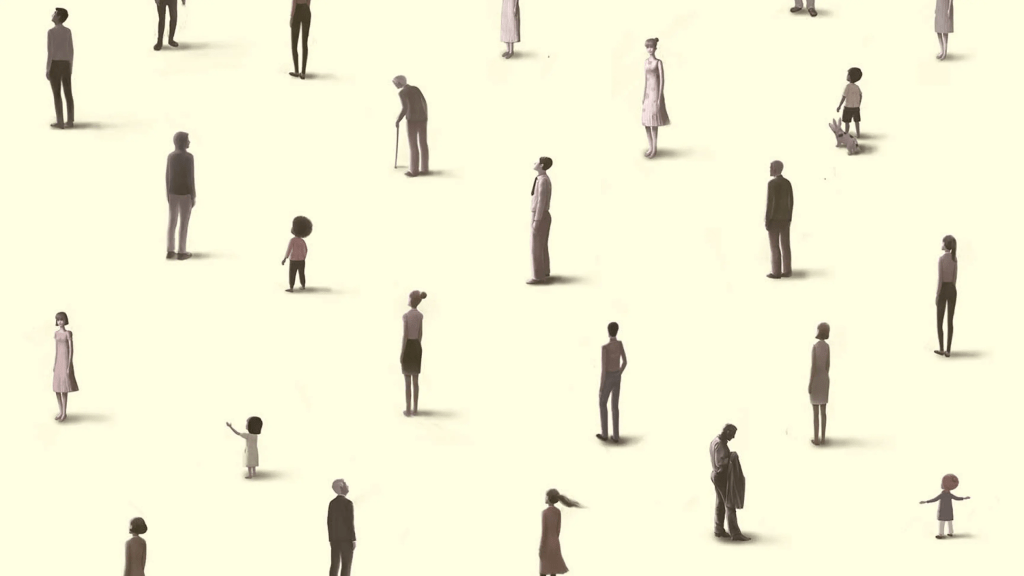
The Harvard Graduate School of Education found that loneliness isn’t necessarily about the absence of people, but the absence of meaningful connection.
The self-care paradox
For much of the past decade, wellbeing has been framed as an individual project.
There is now an almost endless vocabulary for it: boundaries, healing, inner-child work, nervous-system regulation, protecting your peace, romanticising your life, choosing yourself. The list goes on.
Much of this language represents genuine cultural progress. The ability to establish boundaries, recognise unhealthy relationships and take mental health seriously should not be dismissed as a problem. For generations, people were often expected to tolerate relationships, workplaces and social expectations at considerable personal cost.
But every cultural correction carries the possibility of becoming something else.
The question is not whether boundaries are good. It is whether we have begun to confuse emotional safety with emotional comfort.
Because intimacy is, by definition, occasionally uncomfortable.
Friendship requires compromise. Relationships require negotiation. Family requires patience. Community requires tolerance for people who are not exactly like us. Sometimes caring for another person means answering the phone when you would rather be asleep, attending something you are not particularly interested in, forgiving someone who disappointed you or allowing someone else’s needs to temporarily take precedence over your own.
A life designed entirely around personal comfort may be peaceful.
It may also be lonely.
Perhaps we have become better at protecting ourselves than at relating to each other.
We have gone from accidental community to curated community
For most of modern history, friendship did not necessarily require a strategy.
You went to school and saw the same people every day. You worked alongside the same colleagues. You lived near your neighbours. You went to the same pub, church, gym or community centre. You played football on a Sunday. You became friends with someone because you happened to sit next to them often enough.
A significant amount of human connection was accidental.
Our relationships were often shaped by proximity rather than preference. We did not necessarily choose from an endless pool of potential friends, partners or communities; we encountered the people who were already around us, and over time, familiarity became connection.
Dating is perhaps the clearest and slightly more unhinged example.
For generations, romcoms taught us that love happened by accident. You bumped into someone at a bookshop. You spilled coffee on a stranger. Your childhood best friend suddenly took off their glasses and, somehow, became hot. The plot was rarely “I adjusted my filters to within a five-mile radius and we had a 78% compatibility score.”
Romance was supposed to be a meet-cute.
Now, increasingly, it is a marketplace.
Take dating apps. We’re presented with an almost infinite catalogue of potential matches: filter, evaluate, compare, choose. There have never been more options, yet somehow, my friends and I still seem to be cycling through the same five men.
There’s something deeply humbling about sending your friends a screenshot of a new match, only to receive three immediate responses: “Oh, I matched with him.” “Went on a date with him in 2024.” “Absolutely not. He has a fish photo.”
For all the promise of endless choice, the pool can somehow feel surprisingly small (at least in my limited experience, though I’m sure others may disagree). It’s one of the stranger contradictions of modern dating: we have more options than ever, yet somehow, they can all start to feel the same.
Part of this may be because we’ve become surprisingly good at developing a very specific idea of who we’re supposed to date. The athlete. The finance guy. The creative with artfully curated matcha, a film camera and Bell Hooks’ book shots scattered across his profile. We’ve internalised these romantic archetypes so deeply that we’re no longer simply looking for a person; consciously or otherwise, we’re casting for a role.
The apps then make this even easier. Everyone is presented in the same format, competing for attention in the same marketplace, while we filter according to our increasingly refined sense of type. In theory, the pool is infinite. In practice, everyone seems to be fishing in the same corner of it.
And greater choice does not necessarily produce greater connection. It can create the sense that everyone is competing for the same small group of highly desirable people, while many others are left navigating an increasingly unequal market: one where the promise of infinite possibility somehow results in your entire friendship group having history with the same person.
The same shift is happening beyond romance.
Today, many of the structures that once created repeated, unplanned encounters have weakened. Work is increasingly remote or transient, people move cities more frequently, neighbourhoods can feel anonymous, and third spaces are harder to access or less central to daily life. At the same time, technology has given us unprecedented choice over who we meet.
We have more choice over who enters our lives, but fewer places where people simply enter them by accident.
Connection has therefore become something we increasingly have to seek out. We join run clubs, supper clubs, coworking communities, book clubs, wellness retreats and members’ spaces not necessarily for the activity itself, but for what it makes possible: repeated encounters with people who might eventually become part of our lives.
We have gone from accidental community to curated community.
That isn’t necessarily a bad thing. Curated communities can be more intentional, inclusive and aligned with our interests and values. But they represent a fundamental shift in how connection is formed. Where community once emerged organically from the structures of everyday life, we increasingly have to construct it ourselves.
The question is no longer simply, who do I happen to meet?
It is: where do I go to meet the right people?
The death — and reinvention — of the third place
Sociologists have long used the term “third place” to describe the informal environments that sit between home and work: cafés, pubs, libraries, parks, churches, community centres and other places where people can gather without necessarily having a specific purpose.
Their importance is easy to underestimate.
A third place does not necessarily promise friendship. It simply creates the conditions under which friendship can happen.
But increasingly, the third place has disappeared or become harder to access.
And something fascinating is happening in its place.
We are beginning to manufacture third places.
The run club. The supper club. The book club. The pottery studio. The members’ club. The communal sauna. The Pilates studio. The sober rave.
These spaces all provide an activity, but the activity is not necessarily the entire point.
You don’t necessarily join a run club because you are desperate to improve your 5K time. You might join because you want to know people.
You don’t necessarily go to a sauna because you need another wellness intervention. You might go because you want somewhere to be.
And this is where wellness becomes particularly revealing.
The Wellness Industry Discovers the Social
The wellness industry has spent years perfecting the individual experience: track your sleep, improve your recovery, reduce your stress, optimise your biology. But its next phase appears to be moving in the opposite direction: away from constant self-optimisation and toward shared experience.
The Global Wellness Summit’s 2026 trend report identifies an “over-optimization backlash,” pointing to a shift away from high-tech, performative wellness towards experiences that are more emotional, sensory and social. Its “Festivalization of Wellness” trend captures this particularly well: wellness raves, sober dance events, communal saunas and other group experiences are emerging as responses to social fragmentation and digital fatigue. (Global Wellness Summit)
In other words, wellness is beginning to fill the space that socialising once occupied. As drinking becomes less central to social life, the night out is being recast around activities that promise both connection and wellbeing: the bar becomes the cold plunge, the nightclub becomes the sauna, and the night out becomes the run club. Among people actively trying to reduce their alcohol consumption, the use of low- and no-alcohol drinks in the UK rose from 35% to 43.9% between 2020 and 2024, suggesting that the shift isn’t necessarily about abstinence so much as finding new ways to remain socially engaged without the traditional cost of drinking. (National Library of Medicine)
And this is where the paradox gets interesting: the very industry built around taking care of the individual is increasingly becoming a vehicle for bringing people together. What looks like self-care on the surface can, in practice, be a search for community.
London’s communal saunas offer a particularly clear example. Increasingly, they are experimenting with DJs, music and late-night programming, transforming what was once a solitary ritual of relaxation into something distinctly social and nightlife-adjacent. The sauna is particularly apt because it offers many of the things the bar once did: somewhere to go, a ritual to participate in, an atmosphere and, crucially, other people. The difference is that the new social currency is no longer necessarily intoxication, but heat, movement, recovery and wellbeing.
The ritual of going out hasn’t disappeared. We’re simply changing what we go out for.
The members’ club gets a wellness makeover
Perhaps the clearest expression of this paradox is the rise of the wellness members’ club.
We have spent years turning wellbeing into an individual project. Yet the more sophisticated our self-care becomes, the more we seem to crave the one thing that can’t be optimised alone: other people.
And so wellness spaces are beginning to sell something beyond wellness itself: somewhere to go, a reason to return, familiar faces and the possibility of belonging.
This is where the traditional members’ club model becomes particularly revealing. Historically, private clubs sold access to a social world: somewhere to work, drink, eat, network and be seen. The new wellness club follows much of the same architecture, but swaps the cultural currency.
Instead of a cigar room, there is a sauna.
Instead of a business lunch, a longevity consultation.
Instead of a nightclub, Pilates, breathwork or a communal cold plunge.
The architecture of belonging has remained; the reason for belonging has changed.
Perhaps the clearest example is Six Senses Place, which opened in London in 2026 as the brand’s first members’ club. Alongside the familiar ingredients of a private club: a bar, restaurant, lounge, private dining and co-working spaces. It offers longevity medicine, biohacking, wellness treatments, breathwork and community programming. With a proposed 3,000 members and annual memberships ranging from £3,000 to £37,000, it is designed less as somewhere to occasionally visit than as an ecosystem around which members can build their routines.
The model is appearing elsewhere, too. In New York, House 120 positions itself as a longevity lifestyle members’ club, combining advanced diagnostics, personalised health programmes, performance training and recovery with spaces for work, food and socialising. Meanwhile, Clinique La Prairie has expanded its longevity model through membership-based Longevity Hubs in cities including Beijing, Doha, Dubai and Madrid, shifting wellness from an occasional treatment towards an ongoing relationship.
What connects these spaces is continuity.
You return.
You develop routines.
You see the same people.
You become recognisable.
And through that repetition, the very mechanism by which community has historically formed, wellness begins to manufacture the conditions for belonging.
The point isn’t simply that wealthy people now have nicer places to exercise. It is that wellness is becoming a new organising principle for social life.
Which brings us to the strange paradox at the centre of the wellness boom:
We have become so good at taking care of ourselves that we have created an industry dedicated to helping us do it together.
And perhaps that is why the most valuable thing these spaces offer isn’t the sauna, the diagnostics or even the longevity programme.
It’s the people sitting beside you.
The loneliness economy
This is why loneliness may ultimately be less an individual problem than a cultural one.
We tend to treat it as something to solve personally: go out more, make friends, put your phone down, join a club. But loneliness doesn’t exist in a vacuum. It is shaped by where we live, how we work, how we date, how we spend our leisure time, what public spaces exist around us and whether we have recurring opportunities to encounter the same people.
The WHO’s Commission on Social Connection makes precisely this broader argument: improving social connection requires action not only from individuals, but from communities, institutions, cities and policymakers.
So perhaps the more interesting question isn’t simply why are people so lonely? It is what have we built that makes connection so difficult, and what are we building to replace it?
The answer is increasingly visible in our gyms, hotels, spas, restaurants and shopping centres.
Perhaps the next luxury is belonging
There is something almost poetic about the fact that after years of self-optimisation, the wellness industry appears to be rediscovering something very old-fashioned: other people.
The Global Wellness Summit’s 2026 report describes the current moment as a backlash against the idea of treating the human being like a machine that can be endlessly measured and optimised. The emerging alternative is more relational, sensory, emotional and imperfect.
Perhaps that is why the next generation of wellness spaces feel less like clinics and more like cultural institutions.
They have music.
They have food.
They have design.
They have fashion.
They have rituals.
And, most importantly, they have people.
The irony is that we may have spent the last decade learning how to be alone, only to discover that solitude was never the same thing as independence.
We can protect our peace without building a life devoid of other people.
We can have boundaries without making intimacy impossible.
We can care for ourselves without making wellbeing an entirely individual pursuit.
And perhaps the next evolution of wellness isn’t another supplement or another wearable or another way to optimise ourselves.
Perhaps it is something much less marketable:
A place where people know your name.
Because in an increasingly individualised world, the ultimate luxury may not be becoming a better version of yourself.
It may simply be having somewhere to belong.


Leave a Reply