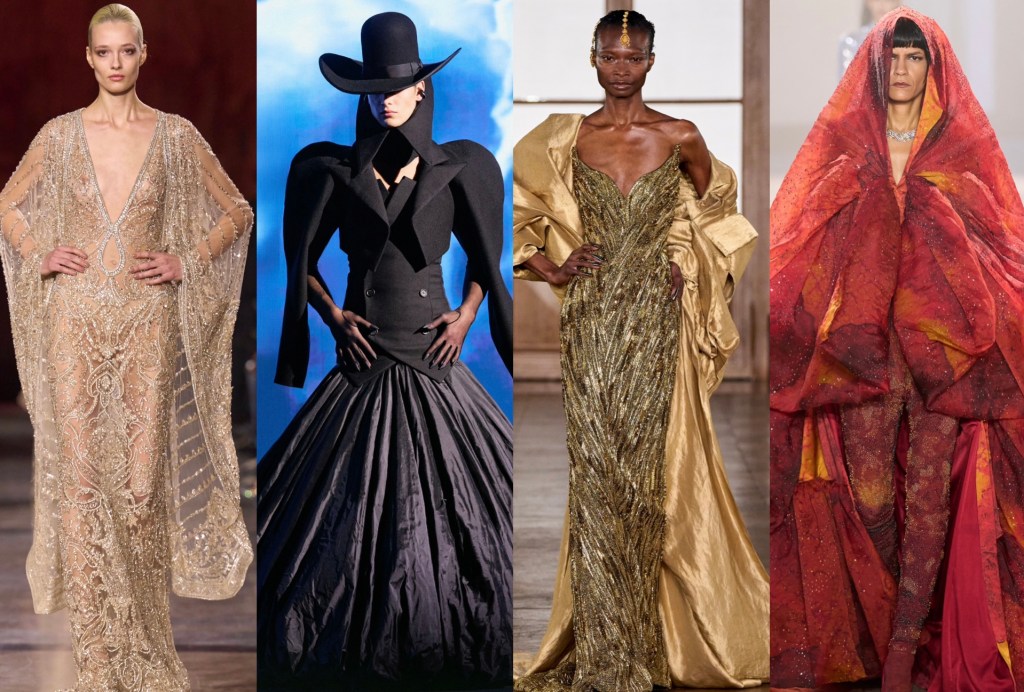
Paris Haute Couture Week 2026 unfolded as a meditation on spectacle, not as excess, but as intention. This was a season less concerned with overwhelming the eye than with directing it, asking how couture is revealed, framed, and ultimately absorbed. Across the week, designers explored not just what couture looks like, but how it is experienced.
From monumental sculptural forms to intimate, restricted viewing formats, couture asserted itself as both performance and philosophy.
Gaurav Gupta: Duality as Origin
The opening look of Gaurav Gupta’s show immediately established the conceptual backbone of the collection: duality. Ethereal yet grounded, luminous yet shadowed, it moved between states rather than choosing one. Light played across the surface of the garment with an almost celestial delicacy, while the underlying structure anchored the body in Gupta’s signature sculptural control.
Light and darkness were not treated as opposites, but as coexisting forces. The fabric appeared almost weightless, catching light in a way that felt celestial, while the structure beneath anchored the body with sculptural intent. This tension between softness and control, transcendence and gravity was central to Gupta’s language.
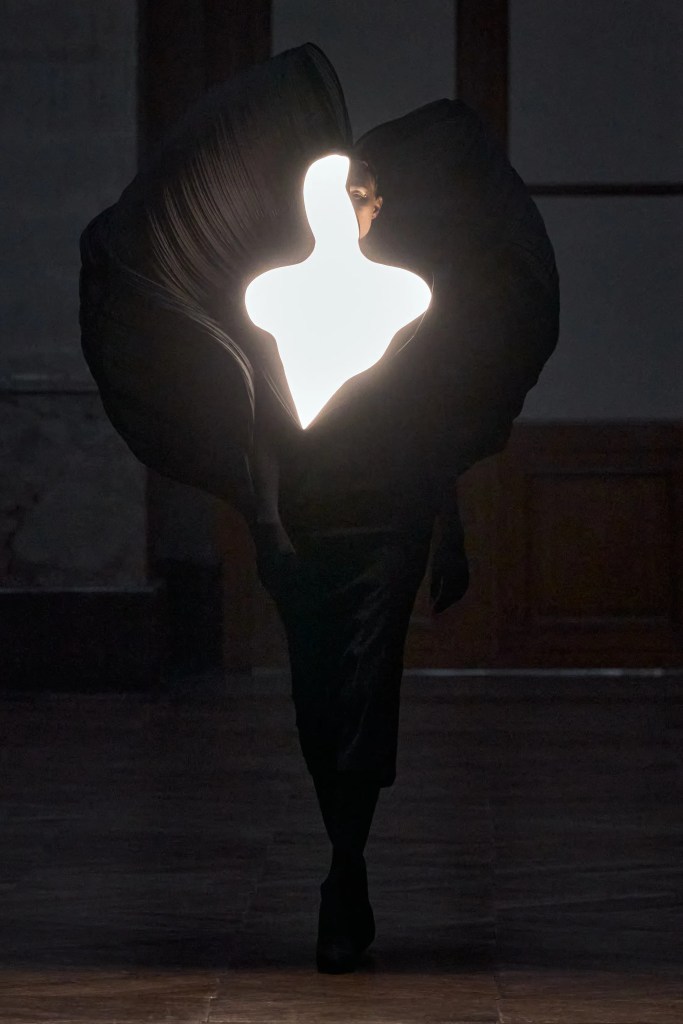
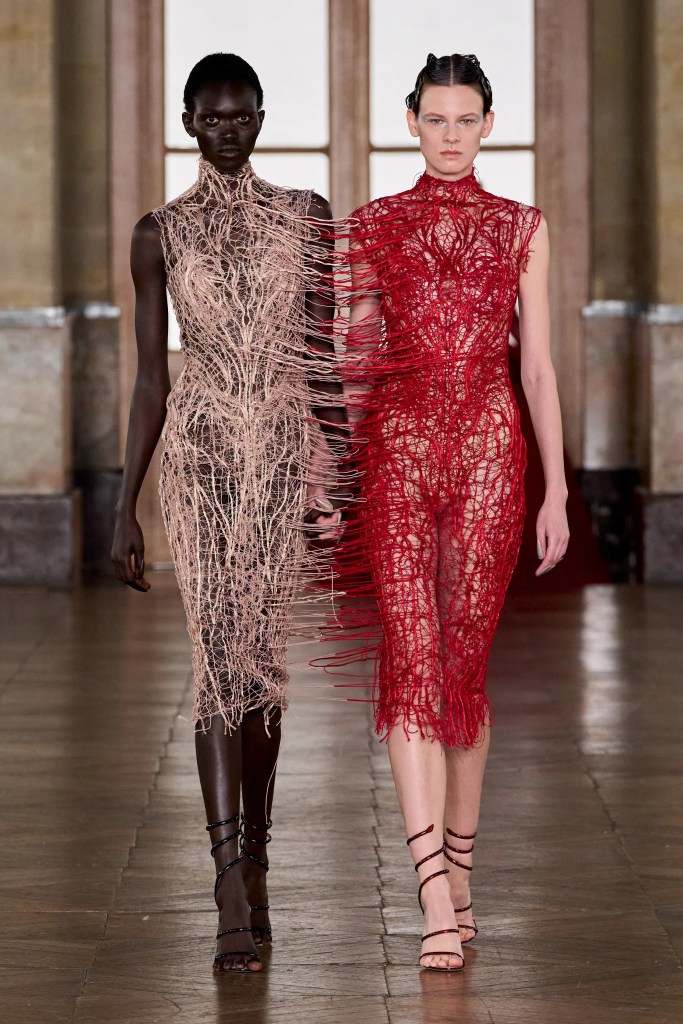
This contrast between light and darkness felt deliberate, not oppositional, but interdependent. The look suggested transformation and balance, an idea that deepened with the introduction of the twin silhouette. Mirrored forms walked the runway as if in quiet dialogue, reinforcing the notion that identity, like couture, is never singular. Instead, it exists in reflection, repetition, and tension.
Rather than opening with bombast, Gupta began with restraint and symbolism, allowing the emotional register to build. It was a reminder that spectacle can be slow, philosophical, and deeply considered.
Schiaparelli: The Allure of the Strange
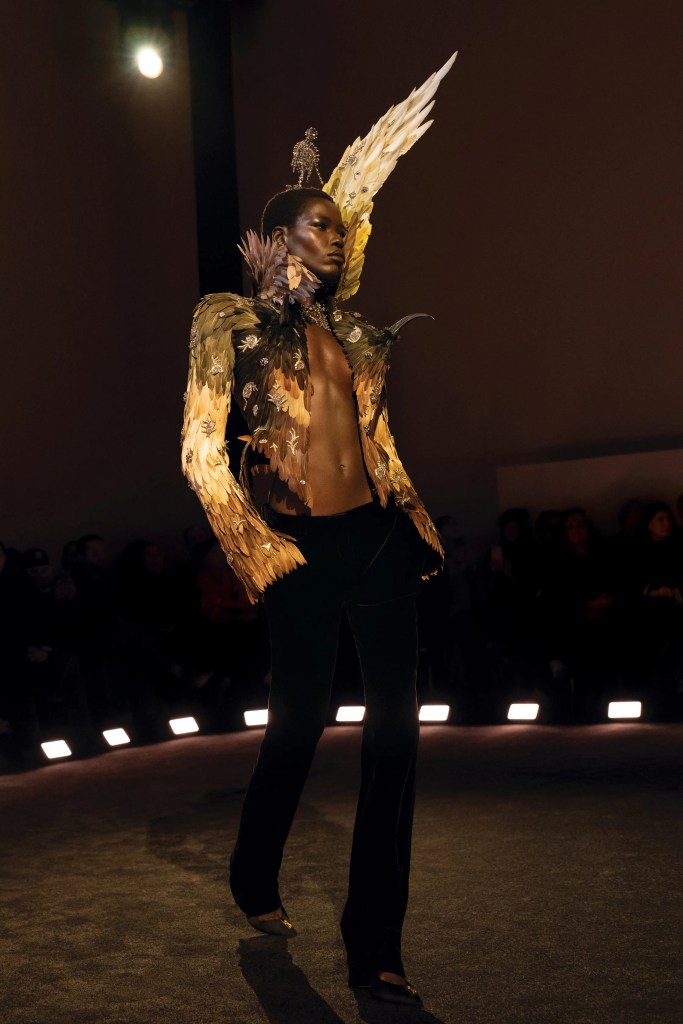
At Schiaparelli, Daniel Roseberry pushed his couture vision further into the surreal, treating the body as a site of metamorphosis. A feathered wing appeared to erupt from the back of a strapless black dress; claws grow organically from the breasts and shoulder blades of feathered jackets. These were not ornamental flourishes but anatomical disruptions, blurring the boundary between adornment and creature.
It is precisely this calibrated strangeness that gives Schiaparelli its gravitational pull. Roseberry understands that beauty becomes more potent when unsettled, when elegance is complicated by something slightly uncanny.
Schiaparelli appeals to serious collectors not simply because of technical virtuosity, but because it offers rarity of imagination. The house makes the beautiful more irresistible by introducing a deliberate, mischievous edge of weirdness.
Valentino: Controlling the Gaze
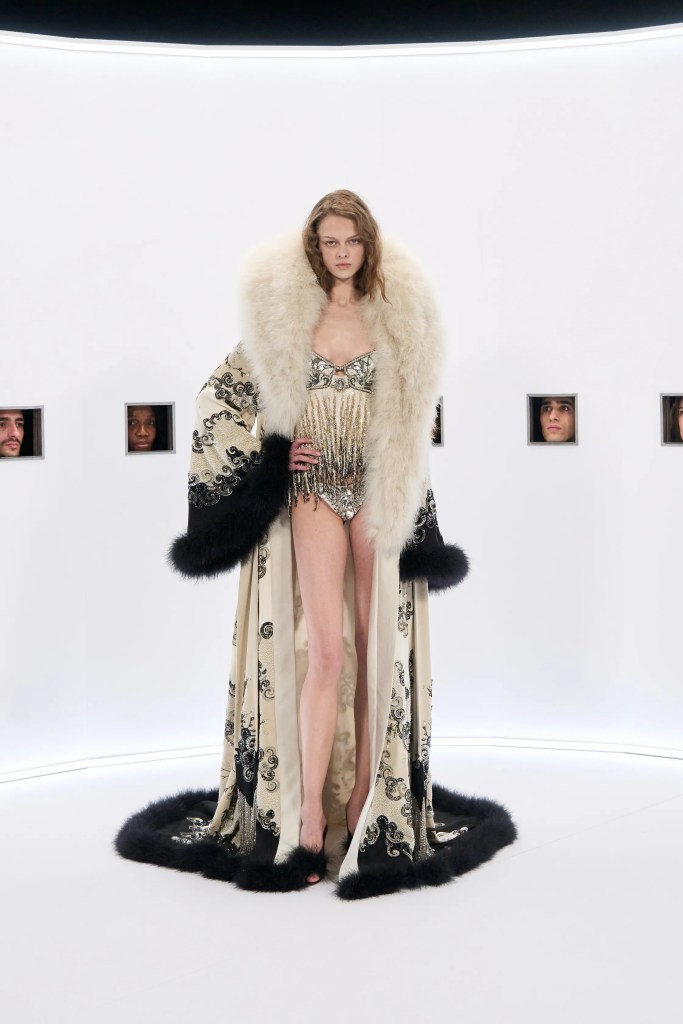
If Schiaparelli expanded the body outward into fantasy, Valentino turned inward, rethinking not the garment but the act of viewing itself. The collection was presented through a peephole-like format, forcing guests to look closely, deliberately, and individually.
In a week saturated with images, this narrowing of perspective felt quietly radical. By restricting access, Valentino heightened desire. Couture became intimate and almost secretive — a private exchange between garment and observer rather than a spectacle for mass consumption. The presentation suggested that luxury, at its most powerful, still thrives on mystery and controlled visibility.
A Week of Cultural Gravity
The energy surrounding the collections was amplified by the cultural weight of the moment. With Jonathan Anderson’s debut couture show for Dior and Matthieu Blazy’s first couture outing at Chanel, Paris felt unusually charged. These were not just runway shows, but symbolic transitions, creative milestones that drew unprecedented attention.
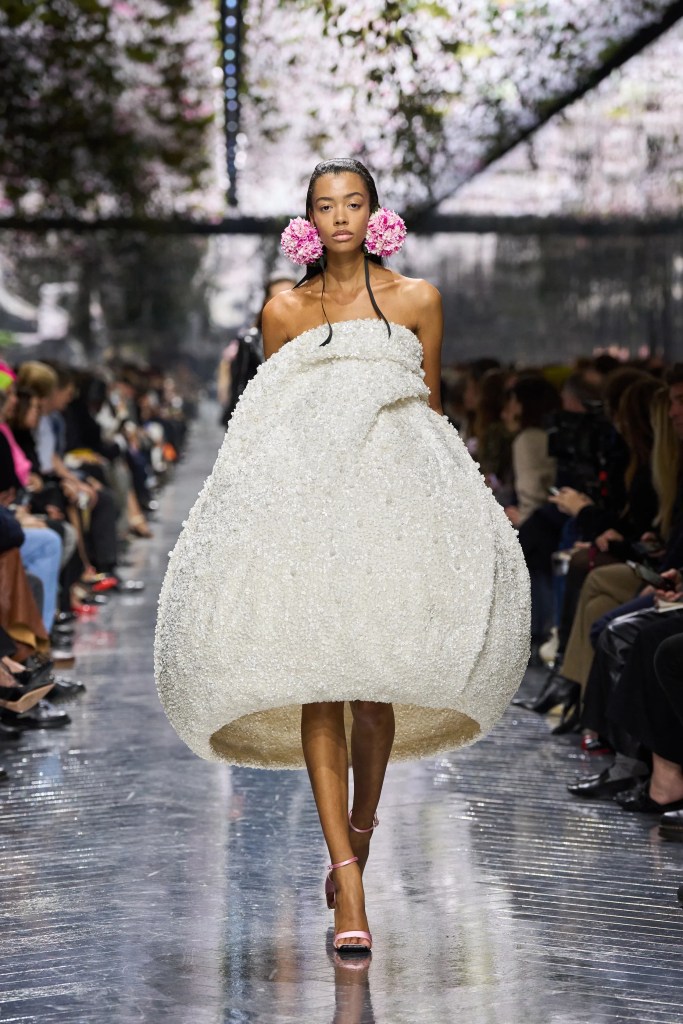
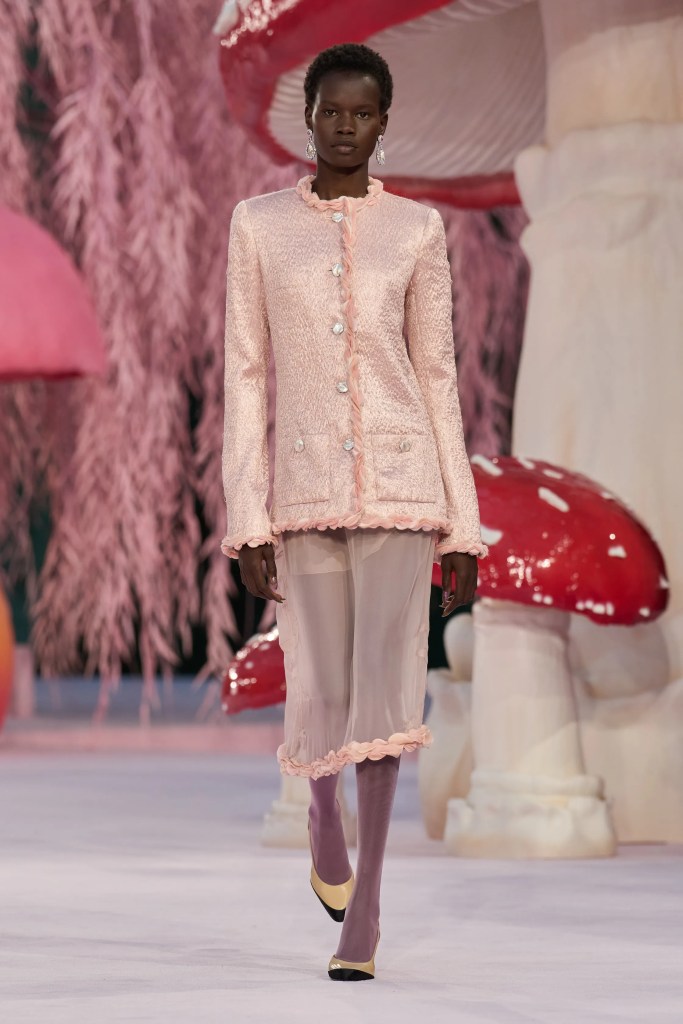
The front rows reflected this significance. Actors, musicians, and cultural figures filled the venues, transforming couture week into something closer to a series of premieres. Celebrity here was not incidental; it functioned as a signal of couture’s renewed cultural relevance.
Spectacle, Reframed
What Paris Couture Week 2026 ultimately demonstrated is that spectacle has evolved. It no longer relies solely on scale or shock, but on framing: conceptual, physical, and emotional. Whether through Gupta’s exploration of duality, Schiaparelli’s seductive strangeness, or Valentino’s controlled gaze, couture asserted that how something is seen can be as powerful as what is shown.
This was a season that trusted the audience to look closer, think deeper, and linger longer.
Spectacle is back — not as noise, but as meaning.
And beyond these moments, the week was rich with unreal runway visions left unnamed: from Rahul Mishra’s intricate, otherworldly romanticism to Kevin Germanier’s high-octane spectacle, punctuated by Lauren Sánchez walking the show, and Robert Wun’s sharply cinematic precision. Paris couture in 2026 was anything but singular.
 the Mirepoix
Leave a comment