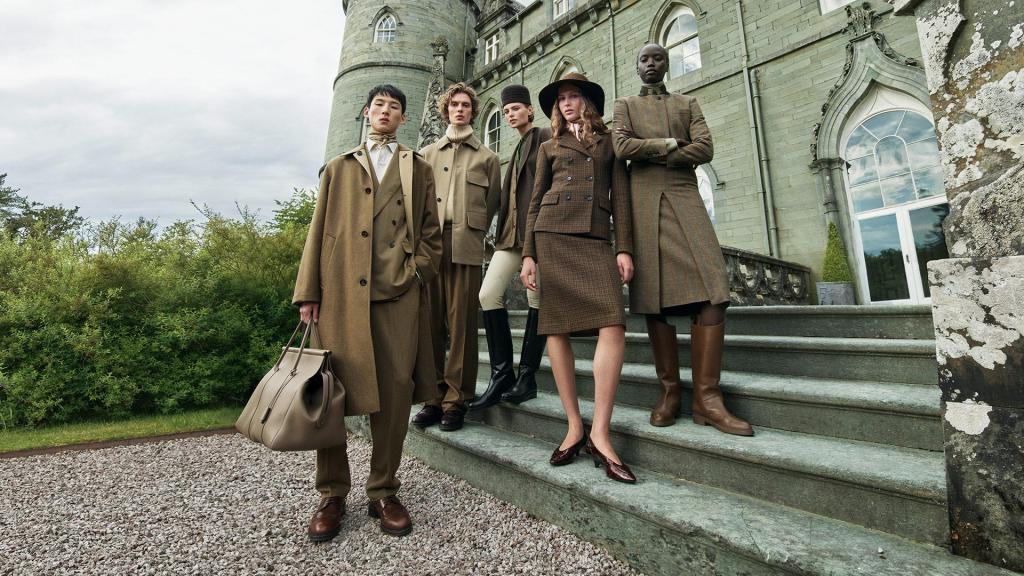
Think Succession’s Shiv Roy closing a deal in crisp Loro Piana, or Blair Waldorf adjusting her vintage Cartier headband en route to brunch on the Upper East Side. For decades, these archetypes — effortlessly wealthy, discreetly stylish — shaped our collective idea of luxury. The mysterious ultra-high-net-worth individuals (UHNWIs), seated permanently on the front row, became the silent guardians of fashion’s uppermost echelon.
But in reality, they represent only a sliver of the pie.
The Real VIPs: Invisible, Invaluable
For decades, these ultra-high-net-worth individuals (UHNWIs) shaped the luxury market from behind closed doors. They had no need to announce their wealth because their access spoke for itself. Discretion wasn’t a preference; it was the point.
Fast forward to 2024, and luxury looks — and sounds — very different.
Today’s luxury consumer might be a middle-class millennial financing their first Chanel Classic Flap. Or a Gen Z TikToker staging a “quiet luxury” Get Ready With Me video wearing The Row, Toteme, and “inherited” vintage Cartier. Or your algorithm suggesting that you could belong to this aesthetic, if you just hit Add to Cart one more time.
The audience may have changed. The psychology? Not so much.
While the truly wealthy operate in the shadows, it’s the aspirational middle-class that has driven much of luxury’s meteoric growth over the last two decades. They’re not buying entire collections — they’re buying the dream, one handbag at a time.
A 2023 Bain report revealed that
75% of luxury spending is driven by middle- and lower-income consumers
At its core, luxury isn’t really about things—it’s about what those things say.
Psychologists have long argued that luxury consumption is an act of identity projection. We buy $5,000 handbags not because they function better than $500 ones, but because they signal success, taste, and cultural literacy. Luxury, in this sense, is performative—a costume for the main character in the story of who we want to become.
But now, inflation and recession fears are testing that stretch.
Behind the Price Tag: The Illusion of Exclusivity
Luxury pricing has always walked the tightrope between aspiration and absurdity—but in the last few years, that tightrope has snapped for many.
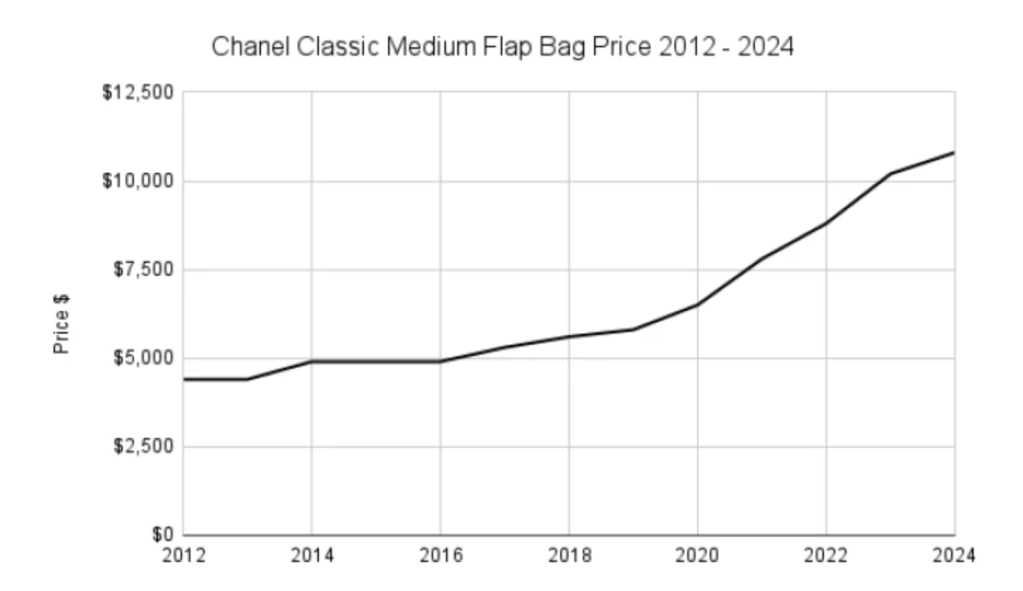
In the past five years, luxury brands have repeatedly raised prices, often citing inflation, material costs, and post-pandemic recovery. Chanel, for example, has surged its price by nearly 4,800% for its Chanel 2.55, while the Classic Flap has risen 980% since the 1980s — and over 120% just since 2016 alone. At current rates, the bag could top $20,000 within five years. (Sotheby’s), a strategic move to align itself with “absolute luxury.” But as the price tags climb, many loyal customers have noticed something else: declining product quality, reduced customer service, and in some cases, more visibly mass-produced items. According to Business of Fashion, even Chanel boutiques are struggling to maintain the kind of bespoke, VVIP-level attention the brand aspires to promise.
At the same time, a wave of viral TikTok videos has begun peeling back the velvet curtain on where these luxury goods are actually made. Chinese manufacturers, factory owners, and industry insiders have taken to the platform to expose the shared production lines between high-end European luxury brands and mid-tier or even unbranded labels. Under hashtags like #ChinaManufacturer—which has over 11,000 posts and counting—creators are openly naming factories that allegedly produce for brands like Gucci, Prada, Balenciaga, and Louis Vuitton, while also showing how the same materials and machinery are used to make far cheaper versions.
Some go a step further, offering factory-direct alternatives to consumers, often at 1/10th the retail price. Others use side-by-side comparisons to highlight near-identical bags, down to stitching and materials. These revelations have fueled a broader conversation: Is the “Made in Italy” label still meaningful if most of the labor happens elsewhere and only the finishing touches are done in Europe?
This shift in visibility is striking because luxury has always thrived on opacity—carefully curated narratives about artisanship, scarcity, and “the soul” of the product. Now, TikTok’s forensic lens is challenging that mythology. In an era where transparency is a growing consumer expectation, the industry’s traditional mystique is becoming harder to maintain—and easier to question.
The result? A profound shift in the consumer psyche. Price no longer equates to value. Prestige no longer guarantees integrity. The very magic that once gave luxury its aura is now subject to public audit—and skepticism.
The Rise of Secondhand Prestige: Recession-Era Resilience or New Luxury Logic?
That transformation is already underway. With inflation rising and economic uncertainty looming, more consumers are reassessing their relationship with luxury.
Secondhand platforms like Vinted have emerged as both a cultural movement and a financial coping mechanism, offering access to designer goods at a fraction of retail cost. In fact, Vinted is now France’s #1 apparel retailer, outpacing every traditional luxury brand in volume.
For many shoppers, resale is no longer just a thrifty choice—it’s a strategic compromise. In an economy defined by caution, secondhand lets consumers retain a sense of aspiration without overstretching their wallets. But for some, it’s not a choice at all—it’s out of necessity. A Gen Z buyer may not be able to afford a new Loewe Puzzle bag, but they can hunt for one used, still participate in the cultural cachet, and make the purchase feel personal, even virtuous.
Still, the resale boom isn’t without friction. Counterfeits are rampant, particularly on peer-to-peer platforms like Vinted, where authentication can be hit-or-miss. As a result, consumers are now balancing value, trust, and access—demanding more from both the platforms they shop on and the brands they buy from.
Which brings us to a pivotal moment for the luxury industry: if secondhand is here to stay, what does it mean to be truly “luxury” in this new era? How can brands preserve their aura, justify their price tags, and reassert their position—not through volume, but through experience, curation, and trust?
Between Aspiration and Access: The New Balancing Act
The real dilemma facing luxury today isn’t simply who the customer is — it’s how to serve an audience that’s growing more fragmented, demanding, and self-aware.
As economic pressures intensify and consumer values shift, luxury brands are walking an increasingly delicate tightrope between exclusivity and accessibility. The ultra-wealthy — billionaires in Monte Carlo, heiresses à la Shiv Roy — will always enjoy unrestricted access. But it’s the aspirational, upper-middle-income consumer who sustains the industry’s volume and cultural relevance. These are the buyers who save for months to acquire their first Chanel Flap or carefully invest in a single statement piece each year — hyper-intentional, deeply informed, and demanding more value for their money.
The challenge for brands is no longer simply selling the dream — it’s how to sustain desire without alienating the dreamers.
Some maisons are doubling down on narrative — amplifying heritage, craftsmanship, and limited-edition drops to preserve allure. Others are expanding their ecosystems through tiered pricing, offering more accessible entry points via beauty, fragrance, and small leather goods — think Chanel No. 5 or Hermès lipstick.
Increasingly, brands are also engineering exclusivity through intimacy: private client salons, invitation-only events, and secret storefronts that resale platforms can’t imitate. Case in point: Bvlgari’s Gala — an ultra-curated experience that blurs the line between commerce and cultural capital.
But none of these strategies are immune to scrutiny. Today’s luxury consumer is fluent in the language of branding — they can spot hollow storytelling and performative exclusivity instantly. They want more than a logo; they want authenticity, ethical production, and emotional resonance. They’re asking: Who made this? Why does it justify its price? And most importantly — what does owning this say about me?
The brands that will endure are those that master this balancing act: delivering aspiration without arrogance, quality without opacity, and prestige without losing the trust of the people who still want to believe in the dream.
Conclusion: The Future of Luxury Isn’t Louder — It’s Smarter
As luxury stands at this crossroads, the playbook of the past — scarcity, price hikes, and logo-driven status — is no longer enough. The next era won’t be defined by who can shout the loudest, but by who can listen the closest. Today’s consumer wants to participate in the fantasy, but on their own terms: with transparency, with meaning, and with a sense of alignment between price and value.
For brands, this means moving beyond simply selling products and toward building relationships — rooted in trust, craftsmanship, and cultural relevance. The ones who succeed won’t just serve the invisible ultra-wealthy or the hungry aspirational class; they’ll bridge both worlds, offering not just access, but belonging.
Because at the end of the day, luxury was never just about ownership — it was about identity. And in 2025, identity is being rewritten.
 the Mirepoix
Leave a comment