The Power of Satire in Luxury: What Cultural Trends Teach Us About Brand Positioning
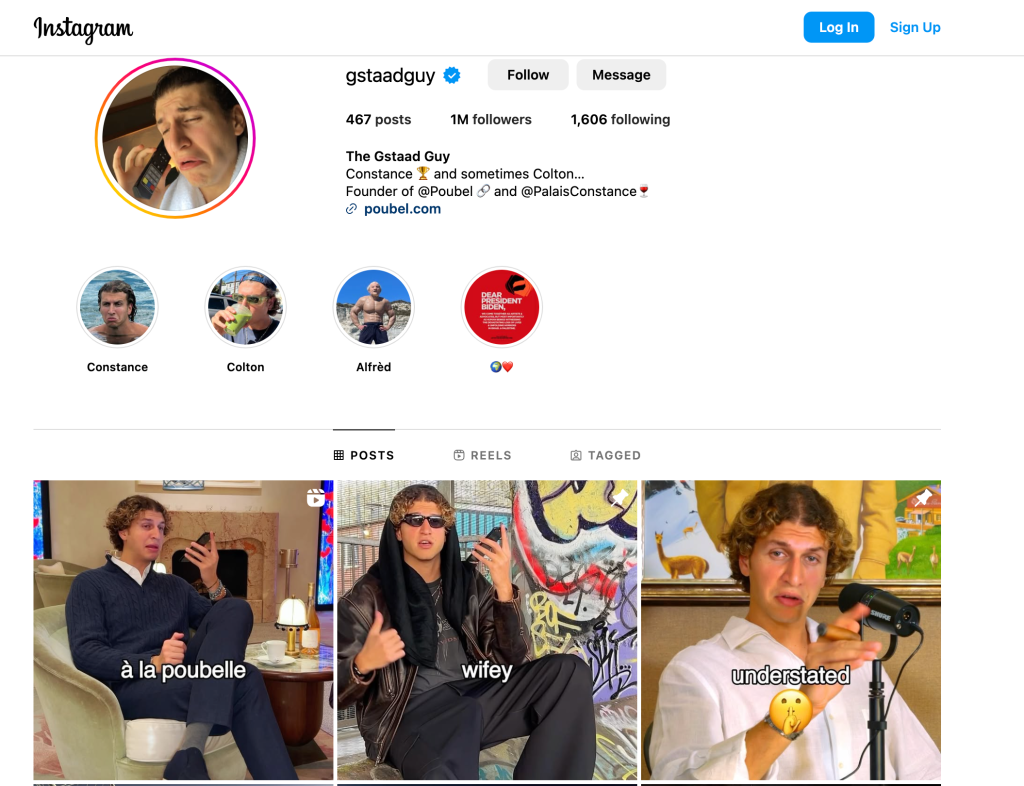
I was having dinner with friends the other night and the idea of ski trips started getting tossed around, and it wasn’t long before someone mentioned St. Moritz—which, of course, seamlessly segued into a conversation about The Gstaad Guy. Suddenly, everyone was chiming in, quoting his videos and laughing about his over-the-top takes on the ultra-rich jet-set crowd. It seems like everyone knows him these days, whether it’s his digs at the pretentiousness of St. Moritz or the way he nails the absurd charm of Gstaad.
That got me thinking: this cultural obsession with poking fun at the wealthy isn’t just entertainment—even the people he’s making fun of seem to enjoy being part of the joke. It’s giving me a whole new perspective to how we see perceive “status” and “luxury”—where being relevant might mean leaning into the irony as much as flaunting the exclusivity.
Satirizing the Wealthy: A New Cultural Currency
The Gstaad Guy and Rich European Kid have carved out niches on TikTok by humorously bashing on the ultra-wealthy. The Gstaad Guy parodies the European jet set with exaggerated accents and over-the-top scenarios, while Rich European Kid flaunts a lifestyle that’s part parody, part aspiration, complete with cheeky commentary on generational wealth. These creators don’t alienate the ultra-rich they parody; instead, they’ve become part of their cultural lexicon.
The appeal lies in the wealthy’s ability to laugh at themselves—or at least to appear in on the joke. Sharing these videos becomes a subtle flex, a way of signaling self-awareness while still reveling in privilege. For the aspirational audience, these TikToks are windows into an inaccessible world, both ridiculous and enviable.
The Banana at Sotheby’s: A Case Study in Luxury Absurdity
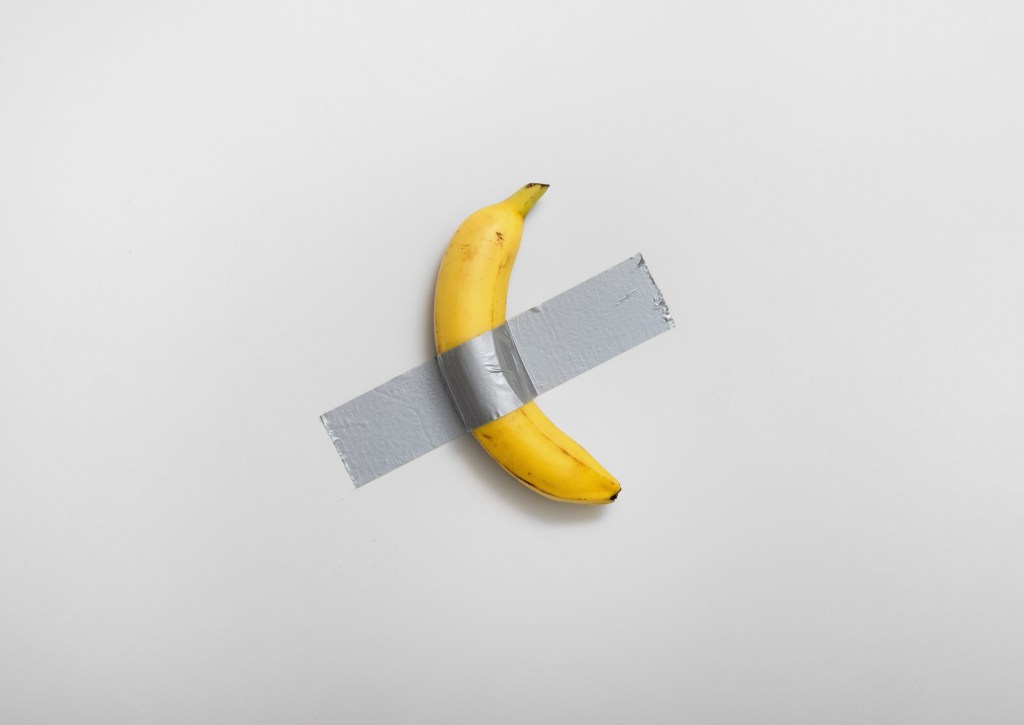
Consider now the infamous banana piece sold at Sotheby’s, titled Comedian by Maurizio Cattelan. The artwork, a banana duct-taped to a wall, sold for $6.2M (paid for by bitcoin) became the subject of global fascination with its absurd concept,was then eaten by the buyer himself. This act is a perfect metaphor for the current state of luxury: it’s both audaciously absurd and deeply self-referential.
The act of eating the banana didn’t devalue the work; instead, it amplified its notoriety. This is emblematic of how luxury works in today’s cultural climate: exclusivity and absurdity go hand in hand, and the spectacle surrounding the product often holds more value than the product itself. It’s not about the banana—it’s about the story it tells and the conversations it sparks.
Luxury Brands and the Absurd
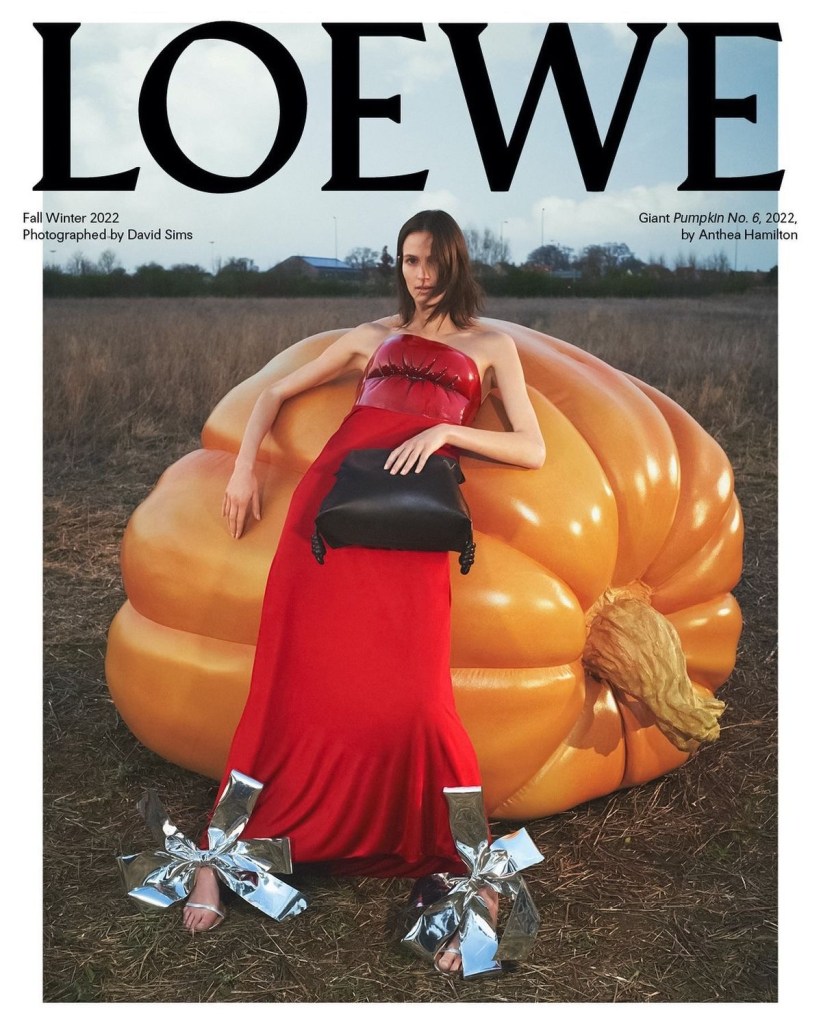
Luxury brands are uniquely positioned to capitalize on this cultural moment. By leaning into the absurd—whether through surreal ad campaigns, outlandish runway shows, or intentionally exaggerated branding—they can remain at the forefront of cultural relevance. Loewe, under the creative direction of JW Anderson, is another standout.
Since Anderson took the helm, Loewe has experienced a meteoric rise. Anderson’s ability to merge the brand’s artisanal roots with his avant-garde and surrealist vision has redefined its image. This transformation is reflected in concrete metrics: Loewe was recently crowned the hottest brand in the world in Lyst’s Q2 2024 report, surpassing perennial favorites like Gucci and Prada. Additionally, the brand’s annual profit has surged by over 60% in recent years, despite tough economic conditions, a testament to its cultural and financial resurgence.
Anderson’s leadership has propelled Loewe to new heights through viral, whimsical designs that resonate with modern audiences. From the anthurium-inspired pieces worn by Zendaya to sculptural accessories that blend functionality with artistic flair, the brand has firmly positioned itself as both a cultural phenomenon and a commercial success. JW Anderson’s individual recognition further underscores his impact. Named Designer of the Year at the prestigious British Fashion Awards, Anderson exemplifies how a strong, innovative vision can turn a relatively understated brand into a global leader. His work at Loewe demonstrates how embracing the absurd and the artistic not only revitalizes a brand’s image but also secures its place as a cultural and financial powerhouse.
Conclusion: The Satire Ecosystem and Its Relevance
From TikTok parodies to edible art, today’s cultural climate reveals that satire doesn’t weaken luxury—it elevates it. Much like Maurizio Cattelan’s Comedian, it’s not necessarily the art itself that holds the value, but what the art represents. The banana, absurd in its simplicity, became a cultural lightning rod, sparking discussions about the nature of art, wealth, and value. This act of storytelling—creating an experience and igniting conversation—is at the heart of luxury’s enduring appeal.
For luxury brands, the key takeaway is clear: don’t take yourself too seriously. The cultural moment rewards those who lean into humor, irony, and a touch of the absurd. Loewe’s playful and surreal designs are proof that being whimsical doesn’t dilute luxury—it enhances it. By embracing the ridiculous, brands can stay relevant, spark conversations, and ultimately strengthen their mystique. Because at the end of the day, it’s not just about the product—it’s about the performance.
 the Mirepoix
Leave a comment