The Timeless Allure of Gucci: A Brand Rooted in Heritage and Reinvention
Gucci’s brand identity is a masterclass in balancing the old and the new, where heritage craftsmanship meets bold, avant-garde innovation. Since its founding in 1921 by Guccio Gucci, the brand has consistently stood as a beacon of luxury, initially celebrated for its impeccable leather goods inspired by aristocratic equestrian culture. Over the decades, Gucci has evolved into a cultural touchstone, renowned for its iconic motifs such as the GG monogram, bamboo handbags, and horsebit loafers. However, what truly sets Gucci apart is its fearless ability to reinvent itself while staying true to its roots, ensuring its relevance in every era.
Under the creative direction of Alessandro Michele, Gucci has reached new heights by embracing eclectic maximalism and breaking conventional fashion norms. Michele’s vision celebrates individuality, gender fluidity, and artistic expression—a philosophy that resonates deeply with today’s global audience. This daring approach, combined with a rich history, makes Gucci a brand that not only adorns but also tells stories, creating an emotional connection with its loyal following.
A Holiday Campaign That Feasts on Drama: Gucci’s Perfect Opportunity
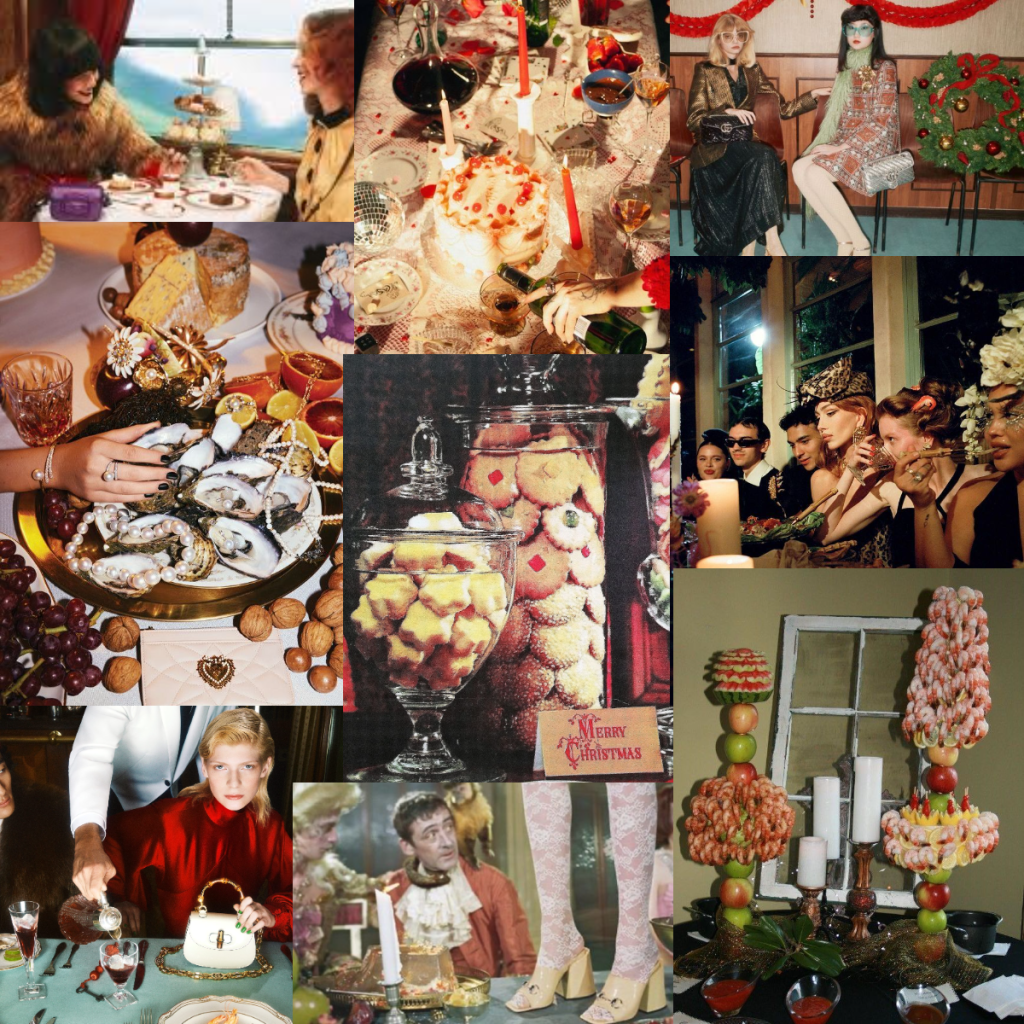
As the holidays approach, Gucci has an unparalleled opportunity to create a campaign that perfectly aligns with its brand identity while tapping into the growing cultural appetite for dramatic aesthetics. A theme centered around a Renaissance-inspired food feast could encapsulate everything Gucci represents: opulence, artistry, and theatricality.
This concept draws on the brand’s history of celebrating excess and grandeur. Picture an extravagant banquet table laden with sumptuous dishes, surrounded by characters dressed in elaborate Renaissance-inspired outfits infused with modern Gucci flair. Velvet brocades, rich embroidery, pearl-encrusted accessories, and ruffled collars would all seamlessly merge Gucci’s heritage craftsmanship with its contemporary edge.
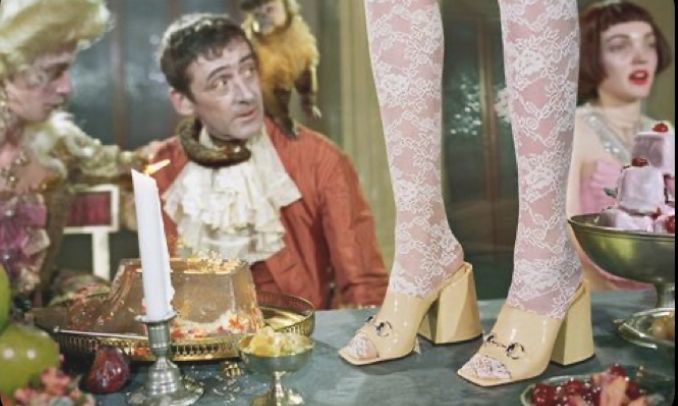
Interestingly, Gucci has already explored the playful intersection of food and fashion in a previous campaign back in 2018. That whimsical concept featured the brand’s signature shoes placed delicately on top of a table, blending the elements of luxury fashion with everyday, accessible items. The campaign was well-received for its artistic approach, with its quirky juxtaposition of high fashion and the mundanity of food sparking intrigue and conversation. Fast forward to today, and there’s an even greater fascination with food in cultural imagery—driven by the rise of culinary trends and social media challenges. Gucci could seize this moment to refresh and elevate that 2018 campaign, tying it to a more dramatic, Last Supper-esque concept that would undoubtedly draw in a broader, even more captivated audience.
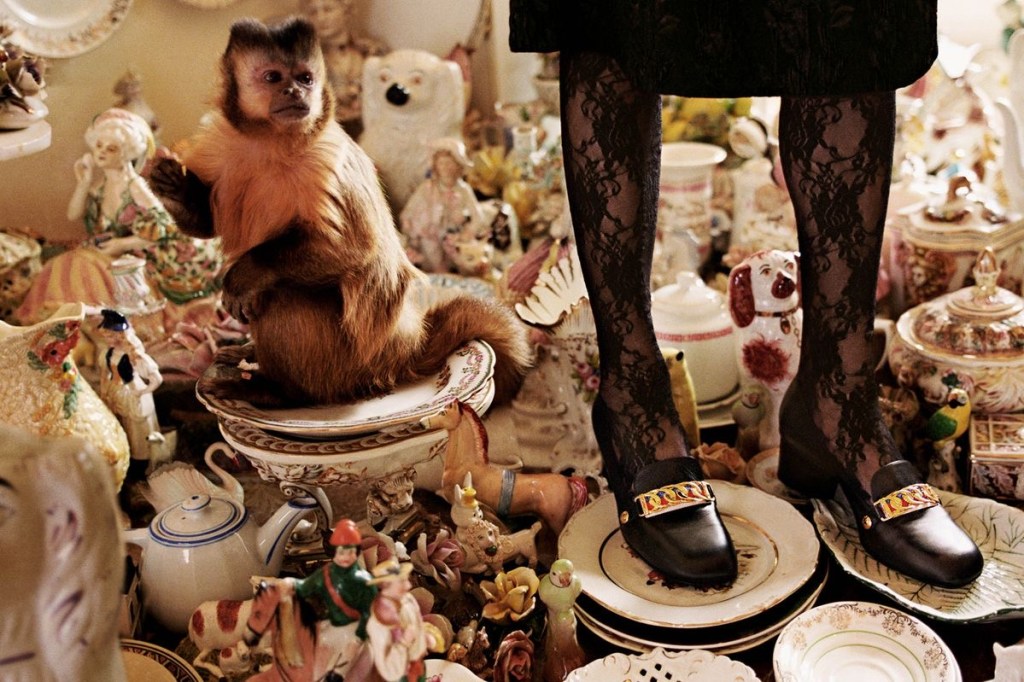
(https://hypebae.com/2018/7/gucci-fall-winter-2018-collectors-campaign)
Why This Concept Aligns with Gucci’s Heritage and Future
Storytelling Through Fashion: Gucci’s success lies in its ability to tell stories through its designs. A Renaissance-inspired feast would be a nod to art history and Gucci’s Italian roots while offering a whimsical reinterpretation of historical opulence. Each character in the campaign could represent a facet of Gucci’s brand—the avant-garde thinker, the nostalgic dreamer, and the unapologetic maximalist.
Artistic Collaboration: Gucci’s past campaigns have excelled by collaborating with artists, photographers, and filmmakers. For this campaign, the brand could partner with renowned set designers and art directors to create an immersive visual experience, perhaps referencing iconic Renaissance paintings like The Last Supper or The Wedding at Cana in a modern, Gucci-fied context. Imagine models dressed in Gucci’s finest, seated around a lavishly styled table, capturing the same sense of artistry and grandeur found in historical works but with a contemporary, fashionable twist.
Tapping Into Cultural Trends: The world is experiencing a renewed appreciation for theatrical, dramatic aesthetics. This campaign would position Gucci at the forefront of this movement, celebrating the excess and decadence that defines both the holiday season and Gucci’s own ethos.
Social Media Gold: The lavish visuals of a Renaissance feast are inherently shareable. From behind-the-scenes TikToks of models getting dressed to Instagram-worthy shots of the banquet itself, this campaign would generate immense organic buzz across platforms.
A Feast for the Imagination
A holiday campaign centered on food and fashion is a natural fit for Gucci. The sensory overload of flavors and textures mirrors Gucci’s approach to design—layered, rich, and unapologetically bold. By juxtaposing Renaissance-inspired decadence with contemporary cultural relevance, Gucci can continue to solidify its place as a brand that transcends time, effortlessly weaving together history, modernity, and artistic vision.
In an era where audiences crave experiences and emotional connections, Gucci’s Renaissance feast could offer not just a campaign, but a cultural moment. This concept wouldn’t just sell clothes; it would create an aspirational world that invites people to dream, indulge, and celebrate—Gucci style. And with a clever nod to its earlier food-centric campaign, Gucci could captivate a fresh audience while reigniting the intrigue of long-time fans.
 the Mirepoix
Leave a comment